
Collection and Transportation:
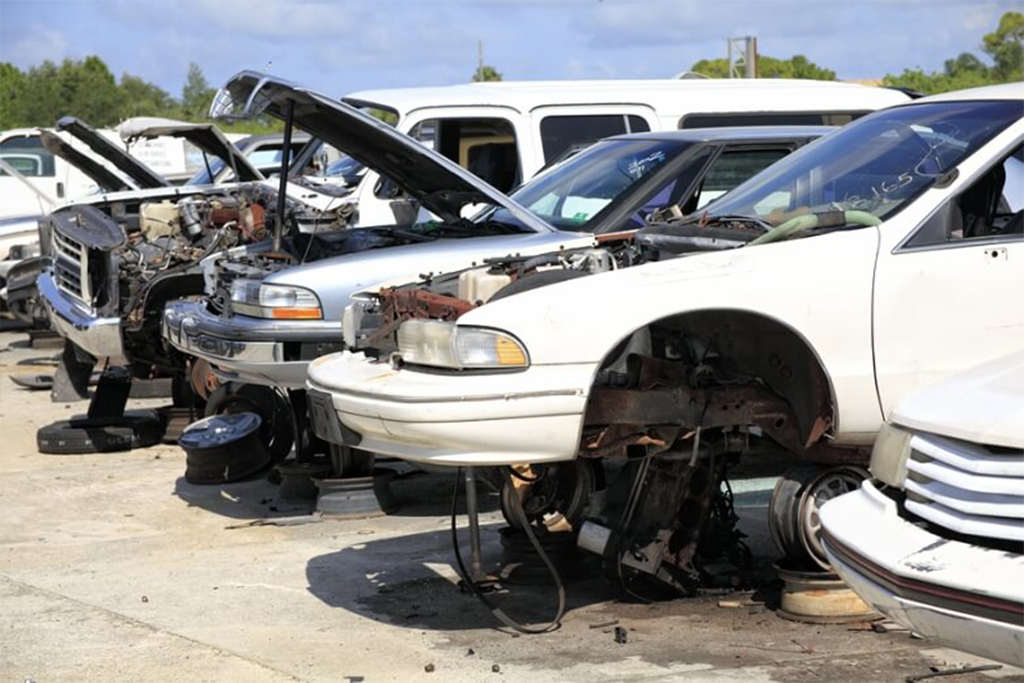
The first step in recycling a scrap car is its collection from the owner’s location. Scrap yards or recycling centers often offer towing services to transport the vehicle to their facilities.
Upon arrival at the recycling center, the vehicle undergoes a preliminary inspection to assess its condition and determine its recycling potential.
Draining Fluids and Removing Hazardous Materials:
Before dismantling the vehicle, all fluids such as oil, coolant, and gasoline are drained and safely disposed of to prevent environmental contamination.
Hazardous materials such as mercury switches, airbags, and batteries are carefully removed to ensure safe handling and proper disposal.
Dismantling and Sorting:
The scrap car is then carefully dismantled, with reusable parts and components separated from materials destined for recycling.
Usable parts such as engines, transmissions, and alternators are removed and cataloged for resale or reuse in other vehicles.
Non-metallic materials such as plastic, rubber, and upholstery are sorted and processed separately from metal components.


Shredding and Separation:
Once the car has been stripped of reusable parts, it undergoes shredding, where it is crushed into smaller pieces using powerful machinery.
The shredded material is then passed through a series of screens and magnets to separate ferrous (iron-based) metals from non-ferrous metals such as aluminum, copper, and brass.
Non-metallic materials are further processed and recycled separately, while the recovered metals are compacted into bundles or bales for transport to metal refineries.
Melting and Purification:
At the metal refinery, the scrap metal is melted down in large furnaces to remove impurities and achieve the desired composition.
The molten metal is then poured into molds to form ingots or billets, which can be used to manufacture new products.

Reuse and Recycling:
The recycled metal is sold to manufacturers across various industries to produce new cars, appliances, construction materials, and other consumer goods.
Non-metallic materials recovered during the recycling process, such as plastics and rubber, are also recycled and used in various applications.
Environmental Compliance:
Throughout the recycling process, scrap yards and recycling centers adhere to strict environmental regulations to minimize pollution and ensure responsible waste management.
Proper disposal of hazardous materials and adherence to recycling protocols help mitigate environmental impact and promote sustainability.
By following these steps, scrap cars are effectively recycled, reducing waste and conserving valuable resources while minimizing environmental impact.